
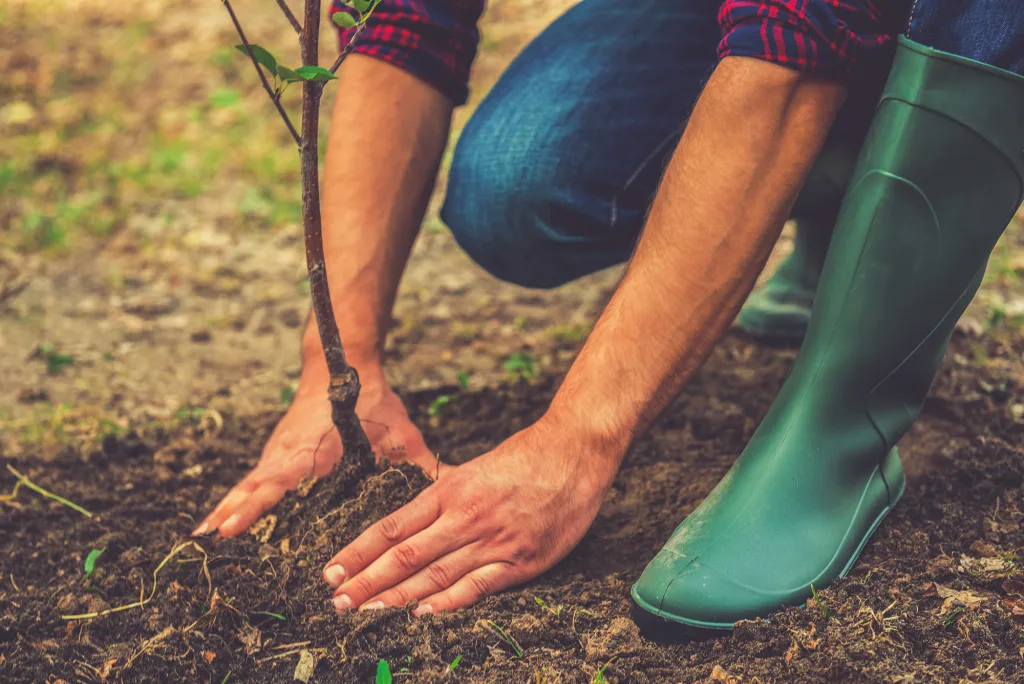
From improved air quality and increased wildlife habitation to enhanced property values and aesthetics, planting trees offers numerous benefits that contribute to a healthier environment and more beautiful landscape.
However, selecting the right tree is crucial for ensuring its long-term health and compatibility with your property. Consider factors such as soil type, climate and the tree’s size when fully mature as well as your purpose for planting the tree — such as shade, fruit or ornamental beauty — to help narrow down your choices and select a tree that meets your requirements.
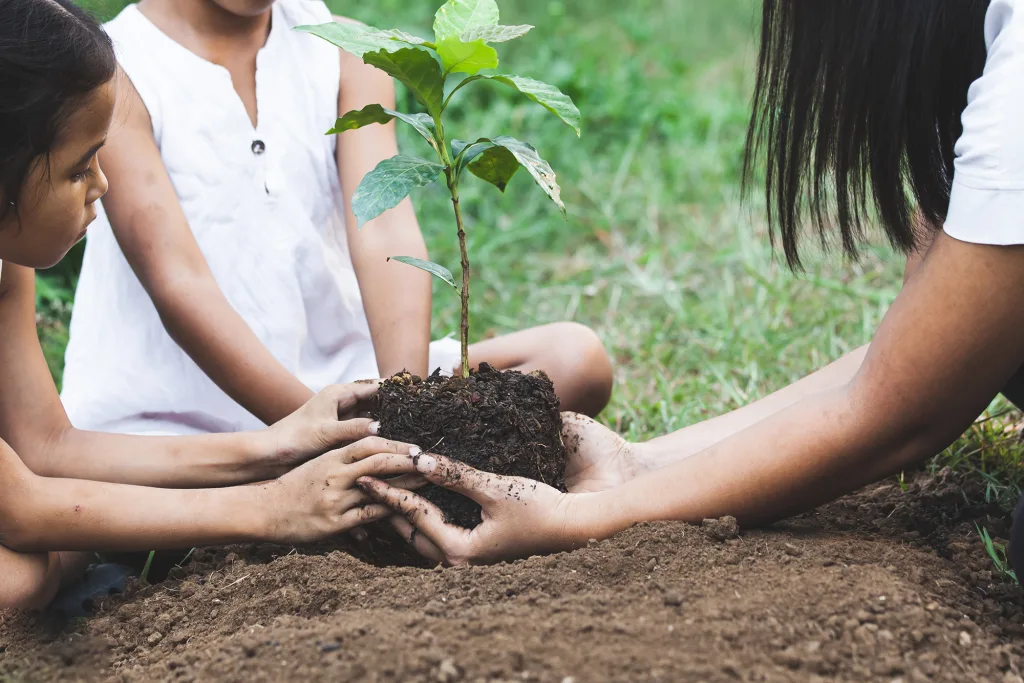
Once you’ve selected the perfect tree (or trees) for your property, follow these steps to plant a tree that will thrive for years to come.
- Choose a location that offers ample space for the tree’s roots and canopy to grow. Avoid areas with overhead power lines or underground utilities.
- Test the soil drainage in the chosen location by digging a hole and filling it with water. If the water drains within a few hours, the soil has acceptable drainage. If it takes longer, select a different site or add organic matter to the soil.
- Dig a hole 2-3 three times wider than the tree’s root ball but no deeper than its height to encourage the roots to grow outward into the surrounding soil.
- Remove the tree from its container or burlap wrapping, taking care not to damage the roots.
- Place the tree in the hole, ensuring the root flare (where the roots spread at the base of the tree) is level with or slightly above ground level.
- Backfill the hole with excavated soil, tamping it down gently to eliminate air pockets.
- Water the tree thoroughly to provide initial moisture to the roots.
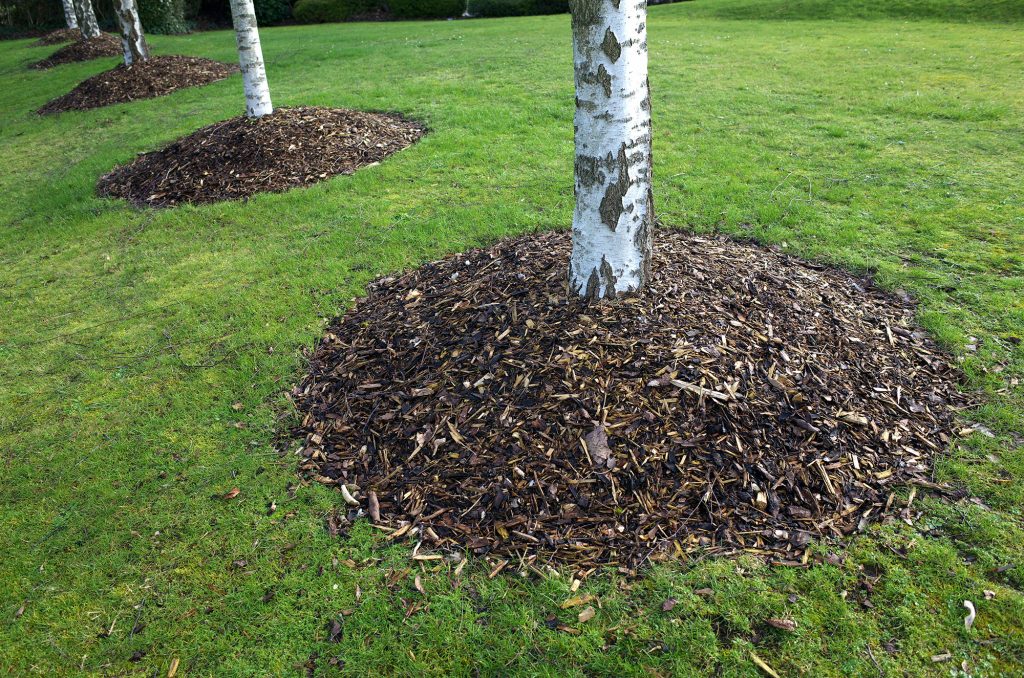
- Apply a 2-3-inch layer of mulch around the base, keeping it away from the trunk to prevent rot.
As your tree grows, periodic maintenance can help ensure its health and structural integrity. Water regularly, especially during dry periods, ensuring the soil remains consistently moist but not waterlogged. Prune the tree to remove dead or diseased branches and shape its growth. Fertilize as needed based on soil test results and tree species requirements.
If you have questions, local nurseries or county extension offices can provide recommendations tailored to your area.