BY Steve Gamel | photos by Chris Bigenho Photography
Hospitals Set New Bar In Proactive Approach With High-Risk Breast Program
Behind every statistic is a woman, a family, a story. Breast cancer touches lives in ways that numbers can’t capture — but early detection can offer more preventative and treatment options. That’s why talking to your healthcare provider about when to begin screenings is so important. For women beyond their 40th birthday, mammograms are part of routine health screenings. However, new options in imaging and testing are making personalized care possible like never before. You deserve to know your risk, so you can take charge of your health.
Baylor Scott & White Health strives to empower women to proactively manage their breast health by connecting them with the skilled team needed to prevent, detect, and diagnose breast conditions, including cancer.
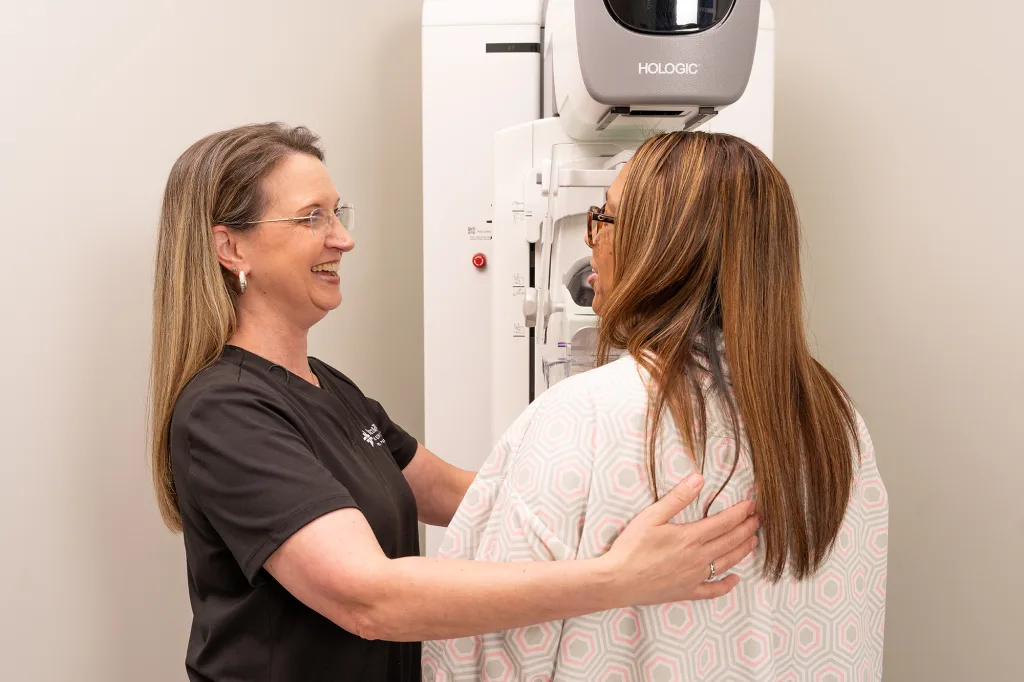
Baylor Scott & White offers advanced mammography at every breast imaging facility using technology that can not only help detect breast cancer in its earliest stages but also give insight into each patient’s risk. These screening services have long been offered at Baylor Scott & White – McKinney and are now expanding to the new Baylor Scott & White Medical Center – Frisco at PGA Parkway.
Taking Preventive Care to Another Level
According to the American Cancer Society, breast cancer is the most common cancer in women in the United States, except for skin cancers. While it mainly occurs in middle-aged and older women, almost 10% of new breast cancers are diagnosed in women younger than 45 — a number that’s growing.
Some women face a higher risk of developing breast cancer. Your risk may be greater if you:
- have a close relative diagnosed at a young age
- have multiple family members who have had breast cancer
- carry BRCA1 or BRCA2 gene mutations
- previous history of breast cancer
For women considered high risk, additional imaging beyond standard annual screenings can provide a more complete picture and help detect concerns earlier. Prevention and early detection often involve a combination of advanced breast screening technologies, personalized diagnostic services, education, and close collaboration with your care team.
As part of this process, women are asked about their personal and family health history and may be offered more detailed risk assessments based on their answers and additional testing.

“There are general recommendations we follow to make sure we, as physicians, are asking the right questions, too. A yearly visit with an understanding of one’s history, an exam, and at times lab work and imaging, allows us to detect things earlier, such as cervical and breast concerns. These yearly visits also allow the physician to work with the patient to recognize modifiable risk factors that could lead to other complex medical concerns,” explains Christi A. Kidd, MD, an OB-GYN on the Baylor Scott & White – McKinney medical staff. “Preventive care allows women to be empowered and make better decisions about their physical health, mental health, and general well-being.”
A Guiding Hand Along the Way
Of course, learning that you’re at high risk can feel overwhelming. That’s why one of the most important features of the program is its team of nurse navigators. Nurse navigators help guide and assist women along their care journey, including scheduling advanced imaging like breast MRI, connecting patients with breast specialists, arranging genetic counseling when needed, and more. These nurses walk women through every step of the process — answering questions, calming fears, and creating a personalized checklist of what should happen next and why.
“I feel fortunate to help women understand what their risks are and walk them through the next steps,” says Allyson Feldman, BSN, RN, nurse navigator for the high-risk breast screening program with Baylor Scott & White Health. “We have women who find out and often become nervous or concerned, but their risk category doesn’t necessarily mean a definitive diagnosis. If they are identified earlier and do get those screenings, we have an opportunity to detect early or at-risk signs of cancer. Our goal is to help women be proactive.”
“Nurse navigators like Allyson do a tremendous job walking women through the process,” adds Isela Lopez, breast imaging manager at Baylor Scott & White — Frisco at PGA Parkway and Baylor Scott & White — McKinney. “From the moment they make an appointment to receiving a call about their results and helping schedule everything that should happen next, they are taken care of with a purposeful continuum of care. The best part is that they feel comfortable speaking with their doctor and are at home with us. It’s a warm and friendly environment, and they know what to expect every step of the way.”
Baylor Scott & White aims to provide patients and their families with compassionate, comprehensive care throughout their breast screening and care journey.
Take Charge of Your Breast Health
Regular screening mammograms are an important step in managing your breast health. Schedule one today at BSWHealth.com/Mammo.

Baylor Scott & White Nurse Navigators
- Offer emotional support to patients and their families
- Answer questions regarding breast health and treatment plans
- Assist with scheduling appointments throughout the care journey
- Share information about breast cancer, the care team and treatment options
- Provide resources on support groups, financial assistance and boutiques that offer wigs, mastectomy bras and prosthetics