BY CHRISTI BLEVINS
Are you ready for some news you can sink your teeth into? February is the 81st National Children’s Dental Health Month. While you probably won’t find any parades, you can celebrate by scheduling a dental appointment for your child.
A Tooth Timeline
On average, a baby’s first tooth will come in at about six months. By the age of three, most children have twenty baby teeth. These teeth usually begin falling out at age five or six, making way for permanent teeth.
The Importance of Early Care
In the past, many people thought the temporary nature of baby teeth meant that they didn’t require regular dental appointments. This couldn’t be further from the truth. When a baby tooth is gone before its time, the permanent teeth can shift into the empty space, causing crowding. Healthy baby teeth ensure a child can chew properly and even aid in speech development.
If you have a little one, it is recommended that you schedule a dental checkup by age one.
Some Tips for a Smooth Dental Checkup
- Schedule your appointment for a time of day when your child isn’t overly tired or hungry. Plan on the first visit taking around 30 to 45 minutes.
- If you have a personal fear of the dentist chair, be careful not to let your child pick up on your anxieties.
- Talk about why seeing the dentist is important with preschoolers. Be enthusiastic!
- Schedule your child’s next visit before leaving the office. Most dentists recommend children be seen every six months, but some encourage more frequent visits. This allows the dentist to keep an eye on possible problem areas and tooth development.
- You are an expert on your child’s behavior. Discreetly let the dentist know if your child has a history of being fearful, anxious, stubborn.
- The best way to have a smooth visit is to protect your child’s teeth between visits. This includes regular brushing and flossing and avoiding sticky and sugary foods.
What to Expect
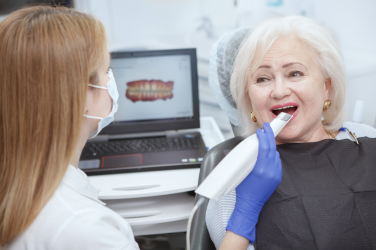
The dentist will check for cavities and educate you on how to clean your child’s gums and teeth. You will also receive advice concerning thumb sucking and pacifier use.
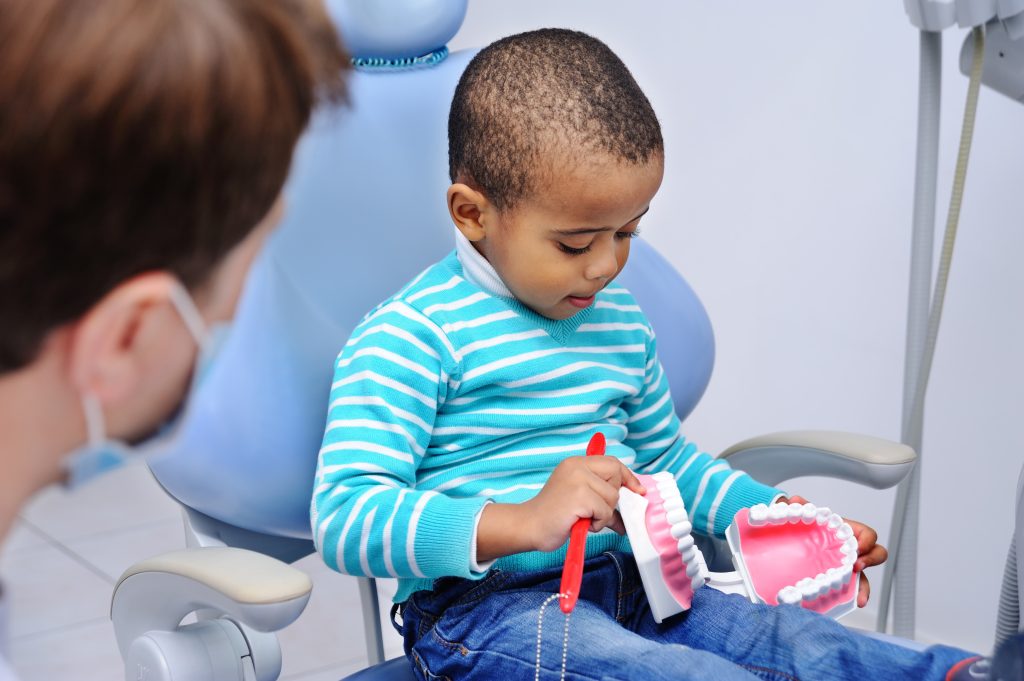
If your child is a little older, the dentist may do a complete exam of the teeth, gums, jaws, and bite. There may be a gentle cleaning to polish teeth and remove any plaque and tartar buildup. This is the perfect time for your child to receive instructions on proper brushing and flossing techniques, even if they still need a parent’s help. Your dentist may or may not recommend X-rays to diagnose decay. While normally taken at every visit, X-rays are used occasionally to see how baby teeth spacing is affecting the permanent teeth.
Older children may be comfortable heading back to the exam room while you stay in the waiting area. Positive experiences in the dentist chair during childhood can lead to a winning smile for life.